Expert Pro Locksmith Service Team
Local locksmith team
Jun 18, 2026 10 min read
If you live in one of Wyckoff's older colonials or Tudors — the kind you find along Crescent Avenue or tucked into the neighborhoods off Russell Avenue — there's a good chance your front door is hiding something most modern homeowners have never seen: a mortise lock. It's a beefy, rectangular mechanism buried inside the door itself, and it's very different from the cylindrical deadbolts you'd find on newer construction. When something goes wrong — a stiff bolt, a broken handle, a key that suddenly won't turn — knowing which type of lock you have is the first step toward getting it fixed correctly.
This guide is written for Wyckoff homeowners who want to understand the real difference between a mortise lock and a cylinder lock, how to identify which one is on your door, and what that means when it's time for a repair or replacement. We'll also cover lock grades, key cutting, rekeying, and when to call a professional locksmith — so you can make an informed decision before anyone touches your door.
## What Is a Mortise Lock — and Why Do Older Wyckoff Homes Have Them?
A mortise lock is a lock mechanism that's installed inside a pocket (the 'mortise') cut directly into the edge of the door. Unlike a surface-mounted lock or a simple tubular deadbolt, the entire lock body — including the bolt, latch, and internal cylinder — is recessed into the door's thickness. This design distributes force across more of the door frame, making it inherently more robust than a standard cylindrical lock. Wyckoff homes built before the 1970s routinely used mortise lock sets because that was simply how quality residential hardware was made. Brands like Corbin Russwin and Baldwin built their reputations on mortise technology, and many of those original units are still in service on local doors today.
What distinguishes a mortise lock visually is its large, almost rectangular faceplate on the edge of the door and the full-length escutcheon (the decorative plate on the face of the door) that surrounds the knob or lever and the keyhole. If your front door has a separate keyhole below the handle — rather than a keyhole built into the knob itself — you almost certainly have a mortise mechanism. The mortise lock cylinder, the small plug inside the lock body where your key enters, is a replaceable component, which is one reason these locks can last for decades with proper maintenance.
## Cylinder Lock vs. Mortise Lock: Spotting the Difference on Your Door
A cylinder lock (sometimes called a tubular or bored lock) is what you'll find on most homes built after the mid-1970s. Installation requires only two circular holes bored through the door — one for the knob or lever mechanism and one for the latch. It's faster and cheaper to install new, which is why tract-home builders adopted it widely. A rim cylinder lock is a related but distinct type: it mounts on the surface of the door and connects to a rim latch or night latch on the interior side, common on older New York-area brownstones and some Wyckoff back doors. Understanding which type you have matters enormously for repairs, because the parts, the labor, and the skill set required are genuinely different.
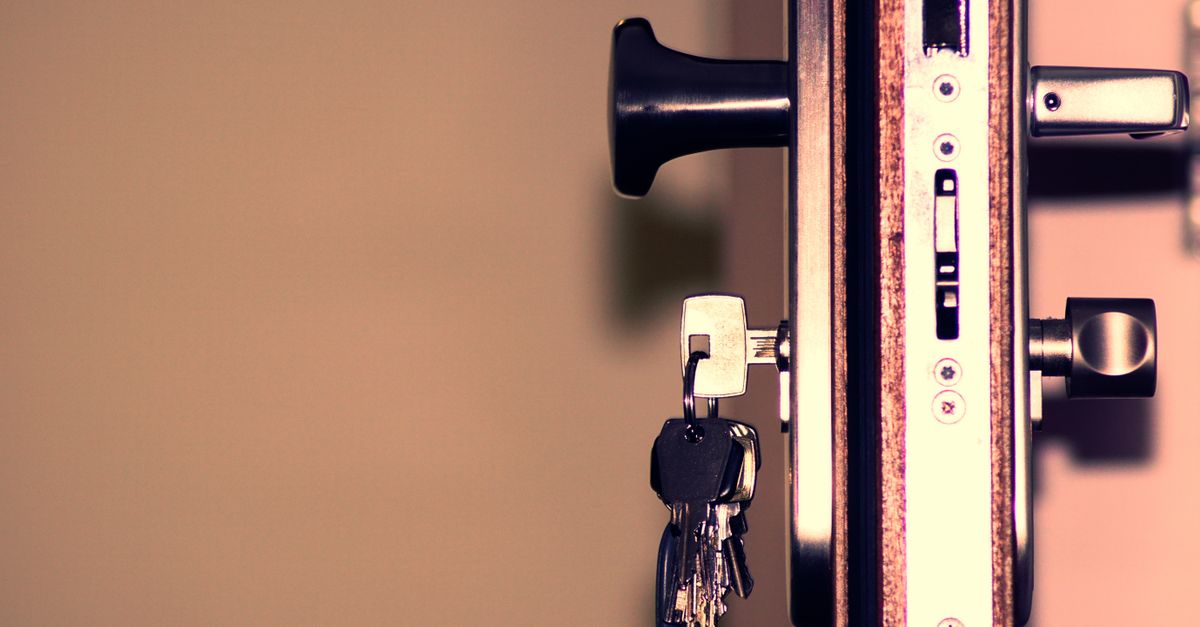
Here's a quick field test: Open your door and look at the edge. If the faceplate is roughly 7–8 inches tall and contains both a latch bolt and a deadbolt in a single housing, you have a mortise lock set. If you see two separate, smaller faceplates — one for the latch and one for the deadbolt — you have a cylindrical system. For a mortise lock set on an exterior door, the lock body typically also includes a strike box mortised into the door frame, not just a surface-mounted strike plate. Confusing the two is easy; replacing one type with the other without professional guidance can leave your door frame structurally compromised or your door literally unable to close properly.
## Three Lock Grades, Key Cutting, and Choosing the Right Hardware
There are three main grades of locks, established by ANSI/BHMA standards. Grade 1 is commercial/high-security grade — the most resistant to forced entry and wear. Grade 2 is residential heavy-duty, suitable for most exterior doors. Grade 3 is light-duty, appropriate only for interior doors or low-traffic applications. Many original mortise lock sets in older Wyckoff homes are effectively Grade 1 or Grade 2 equivalents by today's standards — they were simply built to a higher material standard than the average modern tubular lock. If you're repairing or upgrading, matching or exceeding the original grade matters for both security and insurance purposes.
All-inclusive key cutting services go hand-in-hand with lock work. Whether you need a duplicate house key, a restricted key that can't be copied at a hardware store kiosk, or a new key cut to code after replacing a mortise lock cylinder, a professional locksmith has the equipment to cut keys accurately for both modern and antique lock profiles. Standard key blanks rarely fit older mortise mechanisms — some Corbin Russwin and Baldwin mortise locks require proprietary key blanks that simply aren't stocked at big-box stores. Bringing a worn key to a locksmith for duplication (rather than copying a copy) also ensures the new key works the first time. If you're unsure about your key situation, call (201) 586-7071 — our team carries a wide range of blanks and can cut on-site.
## Rekey for Better Access Control, High-Security Upgrades, and Emergency Locksmith Response
Rekeying is one of the most practical and underused services for Wyckoff homeowners. When you rekey a lock, a locksmith removes the mortise lock cylinder (or the plug in a cylindrical lock) and replaces the internal pin stacks so that old keys no longer work and new ones do — all without replacing the entire lock body. This is the right move after buying a home, after a tenant leaves, after a breakup, or any time you can't fully account for all the keys that are out there. For an older mortise mechanism in good working condition, rekeying preserves the original hardware while resetting access control completely. It's also the smart alternative to changing the locks entirely if the lock body itself is still sound.
We make your property secure by installing high-security locks when the existing hardware simply can't be saved or upgraded to meet modern standards. High-security options for older doors include Grade 1 mortise lock sets with anti-pick, anti-drill, and anti-bump cylinders, reinforced strike boxes, and door jamb reinforcement kits that spread kick-in force across a larger section of the frame. For homes on corner lots or with doors that face less-trafficked areas — a real consideration in some of the more wooded sections of Wyckoff near the Ramapo Mountains foothills — these layered upgrades make a meaningful difference. Our team also responds as a 24/7 emergency locksmith when you're locked out. If a mortise lock's internal mechanism fails and the bolt won't retract, or if a cylinder shears off inside the lock body, don't force it — call us. Attempting to force a mortise lock can damage the door, the frame, or both, creating a much more expensive repair.
## What Determines Your Locksmith Cost — and Our Full Services in the Wyckoff Area
Homeowners often ask: how much does a locksmith cost in NJ, or what is a locksmith call-out fee? Pricing for locksmith services depends on several real factors: the type of lock (a mortise lock set is more labor-intensive than a tubular deadbolt), whether work is needed during regular business hours or overnight, travel distance to your location, and which parts are required. A straightforward rekey is a different scope than a full mortise lock replacement with a new cylinder, new trim, and frame reinforcement. We never quote a price that can change without your agreement — before any work begins, we confirm the exact price up-front so there are no surprises on your end. If you've wondered how much should a locksmith cost per hour in general terms: the answer is that most reputable locksmiths charge by the job, not by the hour, and the complexity of the lock type is the biggest single variable. Is Wyckoff, NJ a wealthy town? It consistently ranks among Bergen County's higher-income communities, with a housing stock that skews toward larger, older homes — exactly the type of property where mortise lock maintenance, period-appropriate hardware matching, and high-security upgrades are most relevant and most often needed.
Our mobile locksmith team serves the full Wyckoff area and surrounding Bergen County communities around the clock. Here is a representative list of what we handle: mortise lock repair and replacement, mortise lock cylinder rekeying, cylindrical deadbolt installation, rim cylinder lock service, door knob lock replacement, lever handle lock installation, high-security Grade 1 lock upgrades, key cutting for residential locks, key cutting for antique and specialty lock profiles, restricted/do-not-duplicate key cutting, car key replacement, automotive transponder key programming, smart key and key fob replacement, car lockout response, home lockout response, commercial locksmith services for offices and retail spaces, master key system design, access control system installation, panic bar and exit device installation, door closer adjustment and replacement, door frame reinforcement, lock rekey after a move or ownership change, mailbox lock replacement, safe opening and safe lock servicing, and padlock replacement for gates and outbuildings. Call (201) 586-7071 any time — we answer 24/7 and dispatch quickly throughout Wyckoff and Bergen County.
Frequently asked questions
Can I replace a mortise lock with a standard deadbolt on my older Wyckoff home?+
Technically possible, but often not advisable without professional assessment. Removing a mortise lock leaves a large rectangular pocket in your door edge that must be filled and refinished before a cylindrical lock can be installed cleanly. The mortise pocket also removes a significant amount of door material, which can weaken the door structurally. In many cases, replacing the mortise lock cylinder and internal components while keeping the original lock body is the better — and less destructive — solution. A qualified locksmith can evaluate your specific door and give you an honest recommendation.
My antique mortise lock is stiff and the key barely turns — is it worth repairing?+
Usually yes, if the lock body itself is intact. Stiffness in an older mortise mechanism is most often caused by dried or congealed lubricant, worn tumblers inside the cylinder, or a slightly misaligned strike box — all repairable issues. A locksmith experienced with mortise lock sets can disassemble the unit, clean and lubricate the internals, replace a worn cylinder if needed, and have the lock operating smoothly again. Given that quality period hardware like Corbin Russwin or Baldwin units can be difficult to match aesthetically, restoration is frequently preferable to replacement.
What's the difference between a mortise lock cylinder and the full lock body — and can just the cylinder be replaced?+
The mortise lock cylinder is the small, removable plug where your key is inserted; it translates key rotation into movement of the lock's internal cam, which operates the bolt. The lock body is the large mechanism housing the bolt, latch, and all internal components. In most cases, the cylinder can be removed and replaced independently — either with an identical profile cylinder or a higher-security upgrade — without touching the lock body at all. This is the most common repair when a key breaks off inside a lock, when a cylinder is worn, or when rekeying the lock isn't sufficient to restore smooth operation.
I'm locked out and my door has a mortise lock — what should I do before calling a locksmith?+
First, check whether any other entry point to your home is accessible — a back door, garage entry, or a window you may have left unlatched. Check with a trusted neighbor who might have a spare key. If none of those options apply, the safest next step is to call a professional locksmith rather than attempting to force or bypass the lock. A mortise lock's bolt is deeply embedded in the door and frame; forcing it risks cracking the door stile, damaging the frame, or destroying the lock body entirely — all of which significantly increase the cost and complexity of the repair. Call (201) 586-7071 — our emergency locksmith team is available 24/7 and will get to you promptly throughout the Wyckoff area.